Lisboa University

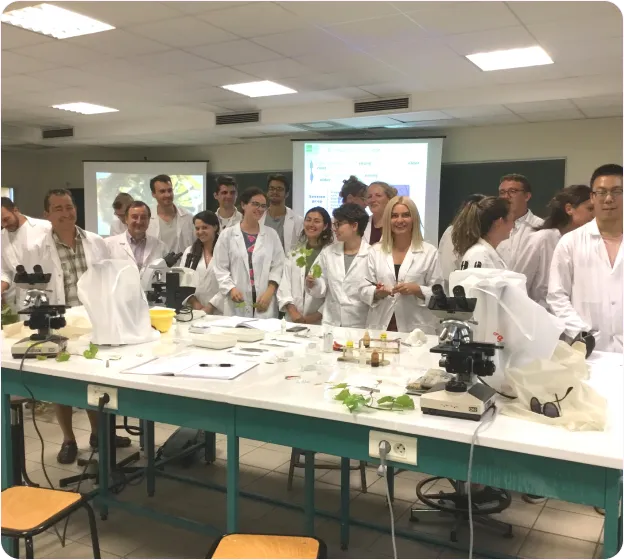
The Instituto Superior de Agronomia (ISA), School of Agriculture, is the largest and most qualified school of graduate and post-graduate degrees in the Agricultural Sciences, in Portugal.
The Instituto Superior de Agronomia (ISA), School of Agriculture of the University of Lisbon, is Portugal’s leading higher education institution in Agricultural Sciences. With more than a century of experience, ISA brings together excellence in education, research, and innovation in Enology and Viticulture, supported by strong and enduring partnerships with industry stakeholders, regulatory authorities, and professional associations. Located in the heart of Lisbon, ISA plays a pivotal role in national and international research networks, coordinating strategic collaborations that promote scientific excellence and the sustainable development of the vine and wine sector.

The Instituto Superior de Agronomia (ISA), School of Agriculture, is part of the University of Lisbon and is the largest and most highly qualified institution in Portugal offering undergraduate, graduate, and postgraduate degrees in Agricultural Sciences. With more than 100 years of experience, ISA combines strong expertise in research and development (R&D) with high-level education in Enology and Viticulture, supported by close and long-standing collaborations with industry stakeholders, regulatory authorities, and professional associations in the sector.

ISA hosts approximately 1,700 students enrolled in undergraduate and postgraduate programmes across the three academic cycles and is supported by a faculty comprising 116 academic staff members and 47 researchers.

Located in the heart of Lisbon, ISA is set within Tapada da Ajuda, a 100-hectare Environmental and Botanical Park that provides a unique academic and cultural environment. The campus also serves as an attractive venue for events and recreational activities, offering notable sites such as the Stone Amphitheatre, the Belvedere, the Garden of the Parada, the Rugby Field, the Astronomical Observatory, the Exhibition Pavilion, and the Lagoa Branca Auditorium.

ISA has a strong commitment to cooperation with Portuguese-speaking countries (PLP) and actively promotes international collaboration with partners in Africa, Asia, and the Americas, particularly through research networks and community-based programmes. ISA coordinates the Portuguese consortium that includes the Faculty of Sciences of the University of Porto and the National Institute for Agrarian and Veterinary Research (INIAV). These institutions have been strategic partners of ISA since the establishment of the Master’s Programme in Viticulture and Enology in 1994. The Faculty of Sciences, one of the largest faculties of the University of Porto, is internationally recognised for excellence in teaching and research in the Exact and Natural Sciences. INIAV’s Hub of Dois Portos, also known as the “Estação Vitivinícola Nacional” (EVN), operates under the supervision of the Portuguese Ministry of Agriculture and is dedicated to supporting the development and competitiveness of the national vine and wine sector.
Involvement in the Vinifera program:

M1 Involvement:

Catarino, Sofia, Dr., Wine Analysis

Felix Gonçalves, Elsa, Dr., Project Management

Ferreira-Dias, Suzana, Dr., Project Management

Lopes, Carlos, Dr., Viticulture

Ricardo da Silva, Jorge, Dr., Enology

M2 Courses:

Advanced Viticulture:

Advanced Viticulture: Vineyard mechanization; Yield Estimation and control; Implications of climate change for viticulture and wine production; Precision Viticulture; Workshop on Grapevine Biotechnology: main applications in viticulture; Sustainable Viticulture

Grape and Wine Derived Products and By-products: By-products: Different types and valorization; Grape Derived Products; Wine Derived Products; Biological, Nutraceutical and Pharmacological Aspects of the Vine Products

Fortified Wines: Vineyards in Douro and the classification system of awarding points and letters; Grape maturation control and harvest decision; Fortified wines in the context of the special Vinifications; Diagrams of production; Port wine: wine categories: Generics and Special ones. Maturation and aging of Port; Other Portuguese fortified wines: Moscatel de Setúbal, Madeira, Carcavelos, others; Fortified Wines of the World; Flor Wines; “Abafados” and “Jeropigas”

Mountain and Semi-Arid and Tropical Viticulture: Semi-Arid and Tropical Viticulture; Mountain Viticulture

Stabilization and Wine Aging: Wine quality control; Evolution and physical-chemical modifications of wines, main phenomena and affecting factors; Wine aging in wood barrels and vat/bottle, micro-oxygenation, oak alternatives; Tartrate stability and main colloidal instabilities in wine; Colloidal phenomena; Fining operation, mechanisms involved, fining agents; Filtration operation, mechanisms of filtration, types of filters; Closures/corks stoppers for wine industry.

Main research topics:

ISA plays a pivotal role in both national and international research networks, coordinating strategic collaborations that promote scientific excellence and the sustainable development of the vine and wine sector.

ISA is an academic partner of the OENOVITI International Network, the largest international research community in Enology and Viticulture, and a member of the International Viticulture and Enology Society (IVES).

At the national level, ISA is a member of PORVID (Portuguese Association for Grapevine Diversity) and member of CoLAB Vines & Wines, a collaborative research and innovation organization that works closely with industry stakeholders to enhance the competitiveness of Portuguese wines. ISA also belongs to ALABE (Association of Oenology Laboratories) and is a member of the CNOIV (Portuguese Commission of the International Organisation of Vine and Wine, OIV).

ISA’s activities integrate fundamental and applied research aimed at promoting high-quality wines with reduced environmental impact, addressing the entire wine production chain, from vineyard management to wine quality and preservation. These activities focus on sustainable viticulture practices and the development of innovative, environmentally friendly technologies for grape and wine production.

Plant and Vineyard: Grapevine biodiversity and grapevine selection; Portuguese varieties and clones; Improved phenotyping and selection; Improved plant and soil management practices; Soil and plant health; Ecophysiology; Precision viticulture; Grapevine trunk diseases; Climate change adaptation; Responses to biotic and abiotic stresses and vineyard water footprint; Vineyard microbial ecology; Molecular markers for specific traits; Biochemical and gene expression analysis, of multi-stress effects on leaf functioning; Grape berry ripening.

Winemaking, Wine Quality, and Authenticity: Prevention of stuck and sluggish fermentations; Control wine microbial spoilage; Prevention of “horse sweat” taint related to spoilage yeast Dekkera bruxellensis; Grape and wine phenolic composition; Grape and wine mineral and isotopic composition; Evaluation of grape quality on winemaking and optimization of quality factors during vinification; Reduction of additives and technological aids; Wine ageing and stabilization; No- and low- alcohol wines; Wine chemical analysis and quality control; Analytical tools for wine authenticity and traceability; Sensory analysis; Sorting and mapping quality wines through sensory profiles; Winery wastes and recycling.

Contact person

Jorge Ricardo da Silva

EMAVE Consortium Representative
Contact person

Cátia Ferreira

Academic Division
Contact person

Paula Ferreira

International Relations

Our Program